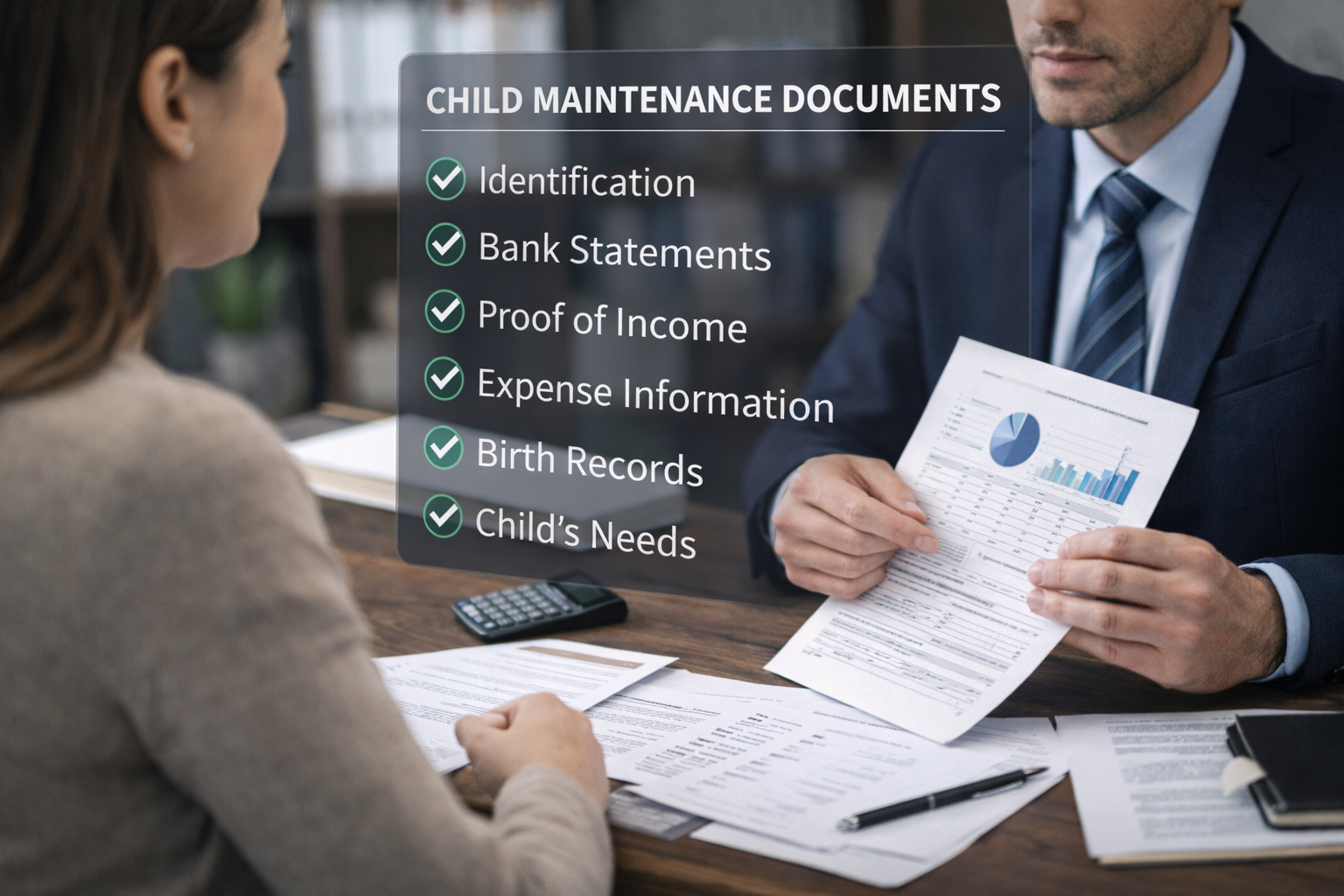
Maintenance matters are rarely only about the amount someone wants to pay. The process usually turns on the child’s needs, the parties’ means, and the documents available to support each side. The Department of Justice’s maintenance guidance still expects applicants to bring identification, birth records, bank statements, proof of income and expense information, among other documents. Maintenance can also be revisited if circumstances later change. The earlier the paperwork is organised, the easier it becomes to present a focused case instead of an emotional argument without supporting figures.
Maintenance disputes are built on facts and figures
Maintenance matters are often emotionally charged, but courts and maintenance officers still need a disciplined financial picture. That is why documentation matters so much: proof of income, bank statements, the child’s regular expenses, educational costs, medical costs and the actual practical arrangements affecting the child. An applicant who arrives with a coherent financial picture is in a stronger position than one who relies only on general assertions of need. The same is true for a respondent who wants to show real financial limits rather than mere unwillingness.
Maintenance can be revisited when circumstances change
A maintenance order is not always the end of the issue. Circumstances change. Income rises or falls. Children’s needs evolve. Schooling, transport and medical expenses may look very different a year later from what they did when the initial arrangement was made. That is why parties should keep proper records even after an order or arrangement is in place. A later increase, decrease or enforcement step is easier to manage when the financial history is clear. Early legal advice is often valuable not only when applying, but also when varying or enforcing maintenance.
Why family-law matters need structure
Family and child-related disputes are often driven by urgency, emotion and history. That is entirely understandable, but it makes structure even more important. Courts and administrative processes still require a clear chronology, relevant documents and focused relief. Parties who treat the case as a running conversation about every past grievance usually make the legal position harder to manage. The stronger approach is to identify the real issue, preserve the documents and present the matter in a disciplined way from the outset.
When legal advice becomes important
A short consultation is particularly useful where children are involved, where safety is an issue, where money or maintenance is disputed, or where one party is already threatening formal process. Early advice can help identify the correct forum, the right urgent steps if any, and the evidence that will actually matter. In family matters, that clarity often saves cost and reduces unnecessary escalation even where the parties remain in conflict.
Frequently asked questions
- Where do I apply for child maintenance?
- Applications are ordinarily made through the maintenance office at the relevant magistrates’ court. The correct forum should still be confirmed on the facts.
- What documents should I bring to court?
- Identification, the child’s records, income information, bank statements and expense information are commonly important. A complete file makes the process far easier.
- Can grandparents ever be asked to contribute?
- That issue can arise in the legal framework, but it depends on the facts and should not be assumed either way without advice.
- Can maintenance be increased or reduced later?
- Yes, maintenance is not always static. Changed circumstances can justify later variation or enforcement steps.
Need legal advice? Contact HVZ Attorneys at info@hvzattorneys.com or 069 725 8646 to arrange a consultation.
Disclaimer: This article is for general information only and does not constitute legal advice. Legal outcomes depend on the specific facts of each matter and the law applicable at the time.