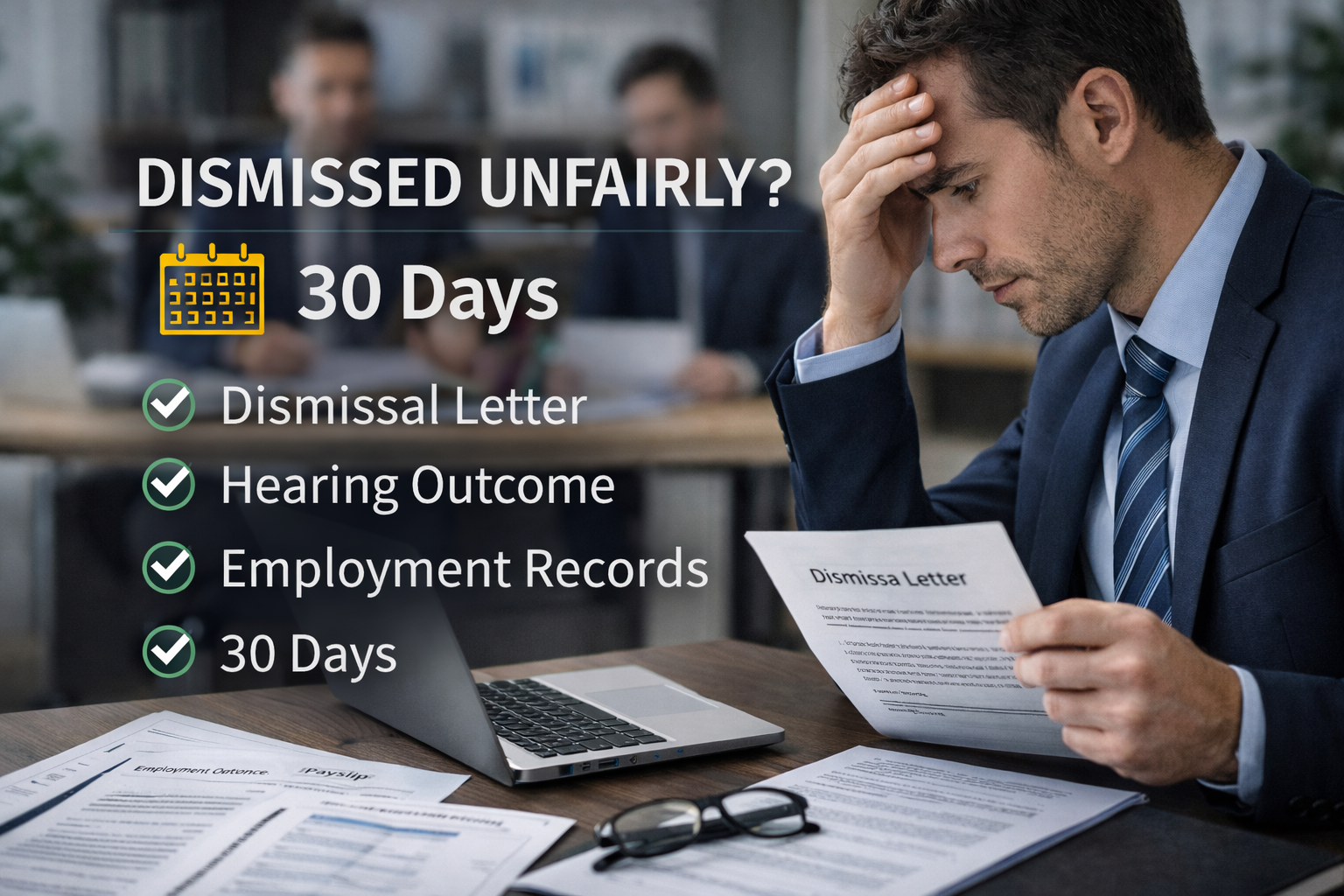
If you think you were unfairly dismissed, the first month matters. In many cases an unfair dismissal dispute must be referred within 30 days, and the correct forum may be the CCMA or a bargaining council rather than court. The first legal step is usually to secure the dismissal letter or hearing outcome, identify the correct employer, gather the disciplinary paperwork and work out whether the referral is in time. Waiting too long, filing in the wrong forum or serving the wrong entity can weaken an otherwise strong case before the merits are ever properly considered.
The first month is about evidence and timing
When dismissal happens, employees understandably focus on emotion first and paperwork second. Legally, the order should usually be reversed. The first task is to secure the dismissal letter, hearing outcome, notice of allegations, minutes if they exist, and any prior warnings or correspondence. The second is to identify the correct employer. In group structures, labour brokers, franchise arrangements or related-company environments, confusion about the true employer can cause real difficulty. The third is to confirm whether the dispute belongs at the CCMA or at a bargaining council. Those issues are not technical distractions; they are often the difference between a focused referral and a compromised one.
Why early mistakes are expensive
Dismissal disputes are frequently weakened by avoidable errors at the start. Some employees wait because a manager says the matter may be reversed informally, only to discover later that the referral time limit is already under pressure. Others describe the dispute too vaguely, serve the wrong entity, or assume that a court application is the natural first step. The law is not hostile to employees who act promptly and clearly, but it is rarely forgiving of confusion that could have been prevented with a short consultation. Early legal advice is therefore not about turning every dismissal into litigation; it is about protecting the case before procedural mistakes begin to overshadow the merits.
Common mistakes to avoid
The most common mistake in employment matters is to assume that a verbal explanation from a manager or HR representative is enough. It rarely is. Employees should keep the signed contract, payslips, warnings, hearing notices, performance correspondence and resignation or dismissal documents in one place. Employers should likewise preserve a proper record instead of relying on memory or informal practice. In labour disputes, timing and paperwork frequently matter as much as the broad sense of fairness that either side may feel.
When legal advice is worth taking
A short consultation is usually worthwhile where the matter affects your ongoing income, professional reputation or future mobility. That is especially true if the document is unclear, the workplace process feels rushed, or the employer has already indicated that lawyers may become involved. Early advice does not force a dispute to escalate. Quite the opposite: it often helps people decide what matters, what can be negotiated, and which rights should be protected before positions harden unnecessarily.
Frequently asked questions
- How long do I have to refer an unfair dismissal dispute?
- In many cases the referral must be made within 30 days of dismissal or the employer’s final decision. Because timing can be decisive, it is sensible to check the position immediately rather than assume the deadline will be extended.
- Do I go to the CCMA or a bargaining council?
- That depends on whether a bargaining council with jurisdiction exists for the sector or workplace. The forum should be checked at the outset, because filing in the wrong place can waste valuable time.
- Can I refer the matter while I am serving notice?
- Often yes, depending on the facts and how the dismissal arose, but the timing should be assessed carefully. The safer course is not to wait for the notice period to expire before obtaining advice.
- What documents should I gather first?
- Start with the key employment documents: the contract, charge sheet, hearing notice, dismissal letter, warnings, payslips and relevant correspondence. Those documents usually shape the first legal assessment.
Need legal advice? Contact HVZ Attorneys at info@hvzattorneys.com or 069 725 8646 to arrange a consultation.
Disclaimer: This article is for general information only and does not constitute legal advice. Legal outcomes depend on the specific facts of each matter and the law applicable at the time.